
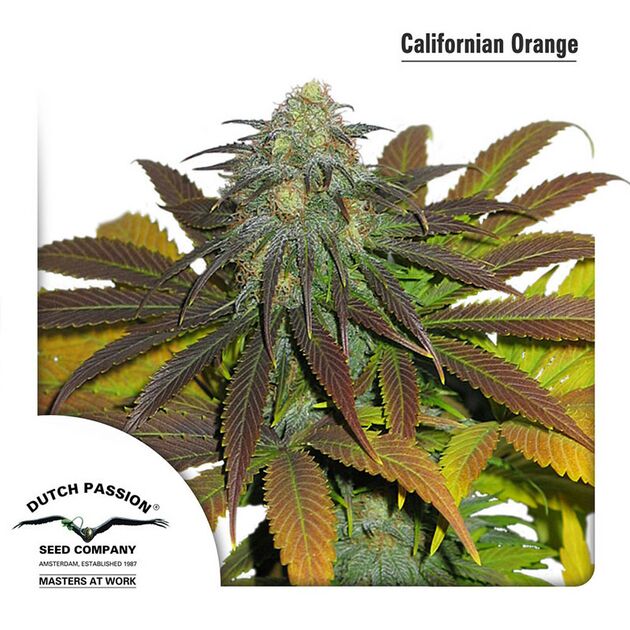
Californian Orange 3 seeds
Californian Orange Seeds – 1980 Classic with Orange Aroma
What is Californian Orange? Californian Orange by Dutch Passion is a feminised, photoperiod hybrid with 50% Indica and 50% Sativa which, according to the breeder, goes back to the year 1980 and has been bred true ever since. The plants usually grow 1.2 to 2 metres tall and produce about 400 g/m². A fairly unique orange scent, plenty of resin and a clear, active and sociable high are typical. Dutch Passion does not state figures for THC and flowering time in the strain description. The strain suits lovers of traditional genetics – in the Classics and Landraces category. Available in packs of 3 and 10 seeds.
Sort Details
Manufacturer Information
Genetics & Origin of Californian Orange
Californian Orange is an old-school classic which, according to Dutch Passion, is only available from this breeder. The hybrid of 50% Indica and 50% Sativa dates back to the year 1980 and has always been bred true since then. Its genetics come from an exceptional Californian strain; the manufacturer speaks of a traditional Californian beauty that goes back to the hippie era. It does not reveal which parent strains are behind it. Dutch Passion describes the line as strong and stable with a high resin content – even the leaves become very resinous. According to the breeder, it has a loyal fan base to this day. The seeds are feminised and photoperiod, so they only flower after the light cycle is switched to 12/12. The strain description does not state a THC or CBD value. Another classic from the same breeder is Blueberry by Dutch Passion.
Who Is Californian Orange For?
Californian Orange is a strain for everyone who prefers classic genetics to newer hybrids. It suits:
- Collectors of traditional strains with a long breeding history
- Lovers of orange and citrus aromas
- Indoor growers with sufficient room height for plants 1.2 to 2 metres tall
- Growers who value resin-rich flowers and leaves
- Consumers looking for a clear, active and sociable high
It is less suitable for anyone who expects maximum yields or depends on manufacturer figures for THC and flowering time. You can find more strains for growing in a tent under feminised indoor seeds.
Growing Californian Orange: Indoor & Outdoor
Indoor Growing
For Californian Orange, Dutch Passion gives a usual height of 1.2 to 2 metres and yields of about 400 g/m²; elsewhere it says the yields are slightly above average. The flowers have a normal ratio of flowers to leaves and become very resinous. The manufacturer does not state a flowering time in the strain description; in the shop the strain is rated at 8 to 10 weeks, which is to be understood only as an approximation. At a height of up to 2 metres, you should keep the vegetative phase short or train the shoots. Not every plant shows the citrus aroma equally clearly – according to Dutch Passion, some plants exhibit it, so selecting a favourite phenotype can be worthwhile. You will find the basics in the Growpedia.
Outdoor Growing
Dutch Passion gives no information on growing outdoors in the strain description, and in the shop Californian Orange is listed as an indoor strain. The outdoor harvest is rated there as only from November – for Central European gardens that is very late, so a greenhouse or indoor growing is the safer choice. The manufacturer does not state an outdoor yield per plant. Only grow where it is legal to do so.
Effect, Aroma & Flavour of Californian Orange
The strain takes its name from the orange scent and flavour, which Dutch Passion describes as fairly unique; some plants show a distinct citrus aroma in smell and taste. The manufacturer does not state a lab terpene profile. It describes the effect as a clear up high that makes you active and sociable – fresh, clear and strong in the old-school style. If you smoke too much, the effect becomes somewhat heavier, according to Dutch Passion. The breeder calls the strain potent but does not give a THC value; in the shop it is rated in the 11 to 19% class, which is only a rough approximation. How intense the effect is depends on dose and individual tolerance.
Note: Effect information is based on manufacturer data and user experience and does not constitute medical advice.
Why Buy Californian Orange at United Seedbanks?
If you order Californian Orange, you should know who you are buying from: United Seedbanks is an established specialist shop for cannabis seeds and stocks Dutch Passion as a permanent part of its range.
- Original genetics from Dutch Passion – Californian Orange as a feminised strain straight from the breeder, in two pack sizes.
- Advice from a specialist retailer – we help if you are torn between several strains or pack sizes.
- Discreet shipping – neutral packaging and free delivery from €100.
- Payment of your choice – credit card, bank transfer or Bitcoin.
- Fresh, verified seeds – professionally stored for a dependable germination rate.
That way you get Californian Orange from a reliable source. You can find more strains from this breeder on the Dutch Passion page.
Frequently Asked Questions about Californian Orange
How old are the genetics of Californian Orange?
According to Dutch Passion, the strain dates back to the year 1980 and has always been bred true ever since. According to the breeder, its roots go back to the hippie era.
Does Californian Orange really smell of orange?
The manufacturer describes a fairly unique orange scent and flavour. According to Dutch Passion, however, only some plants show a distinct citrus aroma.
How tall does Californian Orange grow and how much yield does it deliver?
The plants usually grow 1.2 to 2 metres tall and, according to Dutch Passion, yield about 400 g/m².
How long does Californian Orange flower?
Dutch Passion does not state a flowering time in the strain description. In the shop the strain is rated at 8 to 10 weeks; as a photoperiod strain it only flowers after the switch to 12/12.
Can I grow Californian Orange outdoors?
The manufacturer gives no information on this, and in the shop it is listed as an indoor strain. The outdoor harvest is rated there as only from November, which is very late for Central European gardens.