
Growpedia · Tips for Pros · Chapter 1
Physiological Fundamentals of Germination
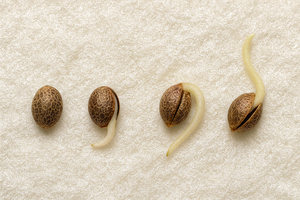
Germination is the biological process in which the dormant embryo inside the cannabis seed becomes activated and begins to grow. This process is primarily triggered by three factors that we control with the paper towel method: moisture, temperature, and darkness.
Imbibition (water absorption): The seed absorbs water through its shell, causing the embryo to swell and activating enzymatic processes.
Enzymatic activity: Enzymes become active and convert stored nutrients into usable energy (sugars), which is required for cell growth.
Radicle breakthrough: Once sufficient energy is available, the radicle (the taproot) breaks through the seed shell. It grows downward and is the visual sign of successful germination.
To maximize the germination rate, materials and environmental conditions must be precisely optimized.
Seed quality: Use only hard, dark brown to brown seeds. Light or immature seeds often fail to germinate.
Water quality: Ideally use distilled or reverse osmosis water to avoid chlorine and minerals. Alternatively, tap water can be boiled and cooled. The optimal pH value is slightly acidic between 5.8 and 6.5.
Paper towels: Choose unprinted, tear-resistant paper towels to ensure no harmful chemicals are released.
Containers: Two clean ceramic plates or a plastic box with a lid work well. The container must retain moisture and block out light.
Temperature control: This is the most important factor. Keep the temperature consistently between 21°C and 25°C. The ideal point is 23°C. Avoid temperatures above 28°C, as they can damage the embryo.
Hydrating the towels: Thoroughly moisten three layers of paper towel with a spray bottle. Gently squeeze out excess water until the towels are wet but not dripping. Place them on the bottom plate.
Placing the seeds: Position the cannabis seeds at least 2 cm apart on the paper towels. Tip: Older seeds can be soaked in a glass of water for 12 hours beforehand to soften the shell.
Covering: Cover the seeds with another three layers of moistened paper towel.
Closing the germination chamber: Place the second plate upside down over the first or close the box. Keep the germination chamber in a warm, dark place.
Daily inspection: Check the setup daily. (Germination typically takes 1 to 5 days, up to a maximum of 10 days.) The towels must remain constantly moist. Mist lightly if necessary. Important: No standing water should collect at the bottom of the plate.
Germination failure (after 10 days): Usually caused by low temperatures, poor seed quality, or oxygen deficiency due to excess water. Slightly increase the temperature if it is below 21°C.
Mold formation: Immediately remove affected seeds. Reduce moisture and improve hygiene.
Root grows into the paper towel: If the root becomes too long, carefully cut around the root with the paper towel still attached and plant it together. Never tear off the root.
The transition into the growing medium is the most delicate moment.
Transplant readiness: The seedling is ready once the white radicle is 1 to 2 cm long and slightly curved downward.
Caution: Handle the germinated seed by the shell. Never touch the delicate white root.
Preparing the substrate: Use low-nutrient seedling soil in small pots. Make a small hole about 0.5 to 1 cm deep using a clean tool.
Planting: Place the seed into the hole with the root pointing downward.
Covering and watering: Lightly cover the seed with soil without pressing it down. Water very gently with a spray bottle. Place the pot under mild light immediately to prevent the seedling from stretching excessively.
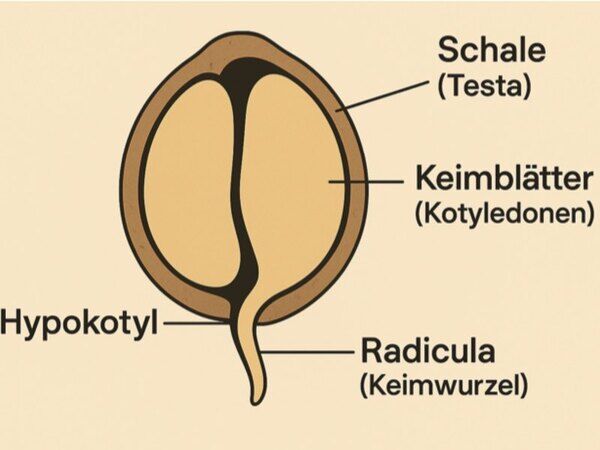
The cannabis seed is the starting point of every cannabis plant and forms the basis for cultivation and propagation. Biologically, a cannabis seed is the …
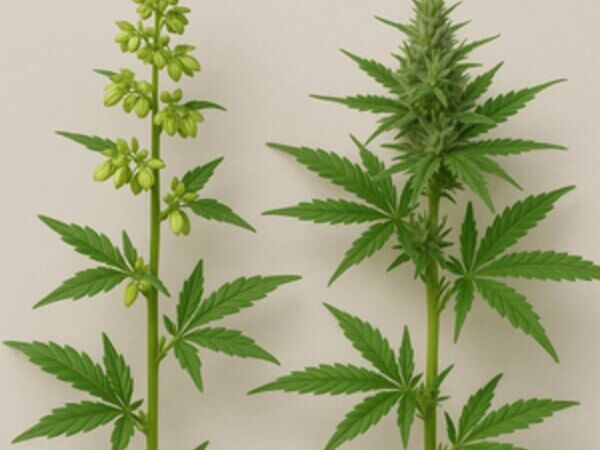
There is strong evidence that the development of male or female cannabis plants is not purely random, but influenced by several internal and external factors. …
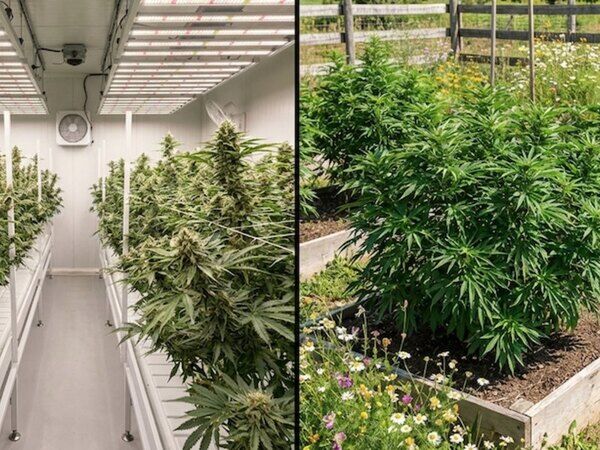
Choosing between indoor and outdoor cannabis cultivation is a key decision for every grower. Today, this choice is often influenced by the use of autoflowering …