
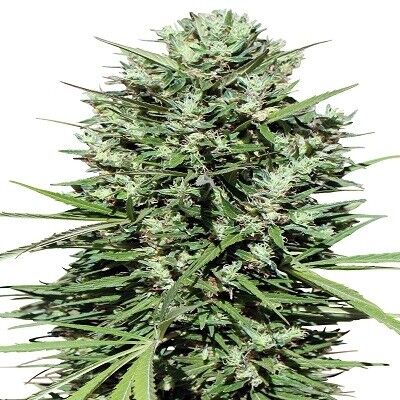
Moroccan Beldia Kif 5 seeds
Moroccan Beldia Kif Seeds – Rif Landrace by Ace Seeds
What is Moroccan Beldia Kif? Moroccan Beldia Kif by Ace Seeds is a feminised, pure Sativa landrace from the Moroccan Rif, which the breeder preserves in its second generation. It flowers for just 7 to 8 weeks indoors, shows semi-automatic (semi-autoflowering) tendencies and is harvested outdoors as early as August. The THC content is 2.5 to 5%, CBD 0 to 2%; Ace Seeds gives the yield as medium. Woody, spicy aromas with honey notes and a light potency are typical. It suits landrace collectors and outdoor gardeners in hot, dry locations – in the Classics and Landraces category. Available in a pack of 5 seeds.
Sort Details
Manufacturer Information
Genetics & Origin of Moroccan Beldia Kif
Moroccan Beldia Kif is a traditional hash plant from the Rif, from the area around Ketama and Chefchaouen. According to Ace Seeds, it is known for kif – the traditional mixture of cannabis flowers and tobacco – and for blond Moroccan hashish. The breeder recounts that since the beginning of the 21st century, foreign indoor genetics have arrived in Morocco en masse and threaten to displace the old strains genetically; it says a group of old-school Moroccan breeders therefore offered it old genetic stock for reproduction and preservation. The seeds are the second generation of this pure Moroccan Sativa (100% Sativa) with 2.5 to 5% THC, 0 to 2% CBD and 0 to 0.16% CBG. Ace Seeds calls it one of the fastest psychoactive Sativa landraces of all; the plants stay small to medium-sized. Another strain that we list as a landrace is Hindu Kush by Anesia Seeds.
Who Is Moroccan Beldia Kif For?
Moroccan Beldia Kif is not a strain for high THC values but for lovers of original genetics. It suits:
- Collectors who would like to have a pure Moroccan landrace in the garden
- Outdoor gardeners in hot, dry locations
- Growers who want to water and feed sparingly
- Fans of the classic blond hash aroma with wood and honey notes
- Consumers who prefer a light potency of 2.5 to 5% THC
It is less suitable if you expect high THC values or large yields; Ace Seeds gives the yield as medium. You can find more pure Sativas under 100% Sativa.
Growing Moroccan Beldia Kif: Indoor & Outdoor
Indoor Growing
Indoors, Ace Seeds states 7 to 8 weeks of flowering. According to the breeder, the landrace is not yet fully adapted to stable photoperiods and artificial light: it can be grown indoors but should not be overwatered or overfed – soft to moderate nutrient levels throughout the entire cycle are recommended. Because of the semi-automatic tendencies, it advises long photoperiods of 20/4 or more and large pots for mother plants, because otherwise the plants may start to flower by themselves. There are two phenotypes: a more common one that grows columnar and tall, and a smaller, more branched one. You can read more about this in the Growpedia.
Outdoor Growing
The strain is particularly recommended for hot, dry climate zones; Ace Seeds gives the latitude as 0° to 50°. Traditionally it is sown at the beginning of spring, flowering begins in June and harvest is in August. The breeder advises starting in large pots to maximise growth before flowering. It rates the resistance to heat as very high, to spider mites, powdery mildew and whitefly as high, to botrytis as medium to high and to cold as medium. It does not state a yield per plant. Only grow where it is legal to do so.
Effect, Aroma & Terpenes of Moroccan Beldia Kif
Ace Seeds describes the bouquet as woody, earthy, spicy and herbal, with “golden” and honey-like notes reminiscent of classic blond Moroccan hashish. The breeder gives specific details on the terpene profile: among the monoterpenes, high amounts of alpha-pinene and beta-myrcene dominate, followed by smaller amounts of beta-pinene; among the sesquiterpenes, beta-caryophyllene (two thirds) predominates over alpha-humulene (one third). The potency is light – 2.5 to 5% THC with 0 to 2% CBD. According to the breeder, the effect begins cerebral and physically sensual and alters perception, then becomes introspective and fades out in a pleasant, sedating relaxation. Even with low THC values, the intensity depends on dose and individual tolerance.
Note: Effect information is based on manufacturer data and user experience and does not constitute medical advice.
Why Buy Moroccan Beldia Kif at United Seedbanks?
At United Seedbanks you buy Moroccan Beldia Kif as original genetics from Ace Seeds. As a specialist shop for cannabis seeds, we place great importance on provenance, storage and transparent information about every strain.
- Original genetics from Ace Seeds – Moroccan Beldia Kif as a feminised pack of 5 from the breeder's preservation work.
- A real specialist shop – reachable in person if you have questions about a strain or your order.
- Discreet shipping – neutral, protected packaging; free shipping from an order value of €100.
- Secure payment methods – credit card, bank transfer or Bitcoin.
- Careful storage – seeds kept cool and dry for optimal germination conditions.
Anyone ordering Moroccan Beldia Kif from United Seedbanks buys verified original seeds. Learn more about this breeder's range on the Ace Seeds page.
Frequently Asked Questions about Moroccan Beldia Kif
Is Moroccan Beldia Kif an autoflower?
Not in the usual sense. Ace Seeds describes it as a Sativa landrace with semi-automatic tendencies that may start to flower by itself if root space is restricted or the lighting period is too short. In the shop it is listed as a photoperiod strain.
How much THC does Moroccan Beldia Kif have?
The breeder states 2.5 to 5% THC, 0 to 2% CBD and 0 to 0.16% CBG. It describes the potency as light.
When is Moroccan Beldia Kif harvested outdoors?
As early as August. Traditionally it is sown at the beginning of spring and starts to flower in June.
Which climate is Moroccan Beldia Kif suitable for?
Ace Seeds recommends it particularly for hot, dry climate zones. The resistance to heat is very high, to cold only medium.
How long does Moroccan Beldia Kif flower indoors?
7 to 8 weeks. According to the breeder, the landrace is not yet fully adapted to artificial light and should be watered and fed sparingly indoors.