
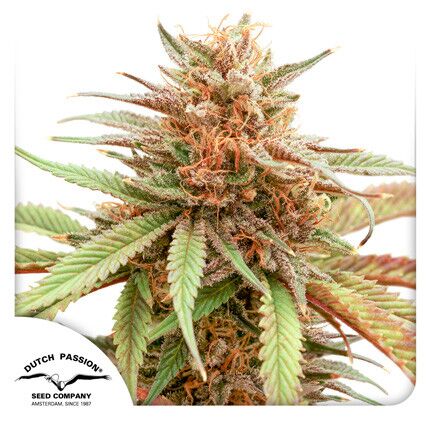
Durban Dew 3 seeds
Durban Dew Seeds – Durban Poison × Frisian Dew for Outdoors
What is Durban Dew? Durban Dew by Dutch Passion is a feminised, photoperiod and Sativa-dominant hybrid of Durban Poison × Frisian Dew. It flowers for 8 to 9 weeks on average, yields 450 to 550 g/m² indoors according to the manufacturer and usually grows 2 to 3 m tall outdoors, with yields of around 500 to 1,000 g per plant. The THC content is described as high but not quantified. A pungently sweet berry aroma and a clear, active high are typical. The robust strain is considered easy and suits beginners growing outdoors – in the feminised outdoor seeds category. Available in packs of 3 and 10 seeds.
Sort Details
Manufacturer Information
Genetics & Origin of Durban Dew
With Durban Dew, Dutch Passion has merged two of its own classics: Durban Poison and Frisian Dew, which the breeder describes as a Cannabis Cup winner. By its account, both are known for an exceptional terpene profile, and both have proven themselves outdoors, indoors and in the greenhouse. The cross was developed in the changeable, damp Dutch climate; Dutch Passion classes it as a true outdoor strain. The result is a Sativa-dominant hybrid with pronounced vigour, narrow leaves and many strong side branches. The manufacturer does not state percentages, and the THC content is likewise only described as high. The seeds are feminised and photoperiod. A small proportion of the plants show pink and purple hues. You will find another of the breeder's classics in our range in Blueberry by Dutch Passion.
Who Is Durban Dew For?
Durban Dew is a robust all-rounder with a focus on outdoor growing. It suits:
- Beginners starting out outdoors or in a greenhouse
- Outdoor gardeners in temperate climates, including near the sea or in cooler hill locations
- Guerrilla growers who need a resilient plant
- Indoor growers who work in SOG or SCROG
- Consumers looking for a clear, active Sativa high for social occasions
It is less suitable for small gardens with little space: outdoors the plants grow 2 to 3 m tall, and over 4 m with a long vegetative phase. You can find more strains of this kind under Sativa strains.
Growing Durban Dew: Indoor & Outdoor
Indoor Growing
From the switch to 12/12, Durban Dew needs 8 to 9 weeks on average – fast for a Sativa, as Dutch Passion emphasises. The breeder gives the average indoor yield as 450 to 550 g/m². Because of the vigorous growth and the narrow leaves, it recommends SOG or SCROG; topping or fimming limit the height and make the plant wider. Under controlled conditions it shows less colour but forms very full, compact flowers instead. Dutch Passion advises large, aerated pots and purely organic growing. The manufacturer does not state an indoor height. The Growpedia tips for beginners offer help for your first run.
Outdoor Growing
Outdoors, the average plant grows to about 2 to 3 m, and to 2.5 to 4 m and more with a sufficient vegetative phase. In the northern hemisphere it is ripe in September or October, depending on latitude. According to Dutch Passion, plants yielding around 500 to 1,000 g are the rule rather than the exception. The strain copes comparatively well with rain and cold; even so, check it for bud rot towards the end of flowering and remove dead foliage. Only grow where it is legal to do so.
Effect, Aroma & Flavour of Durban Dew
Dutch Passion describes the flavour of Durban Dew as smooth and sweet, the aroma as pungent, sweet and fruity. Sometimes it is reminiscent of sour sweets, and often a berry note predominates. The breeder speaks of a new, complex terpene profile that it says unanimously won over its test panel; it does not name individual terpenes or lab values. The high is portrayed as clear, energetic and uplifting – social, creative, euphoric and long-lasting, expressly not a couch-lock strain. Dutch Passion recommends it for parties or concerts. At the same time, the manufacturer points out that a very high dose can also have a strongly sedating effect. The THC content is given as high but not quantified; the intensity depends on dose and tolerance.
Note: Effect information is based on manufacturer data and user experience and does not constitute medical advice.
Why Buy Durban Dew at United Seedbanks?
At United Seedbanks you buy Durban Dew as original genetics from Dutch Passion. As a specialist shop for cannabis seeds, we place great importance on provenance, storage and transparent information about every strain.
- Original genetics from Dutch Passion – Durban Dew bred from two of the breeder's in-house classics, in packs of 3 and 10 seeds.
- A real specialist shop – reachable in person if you have questions about a strain or your order.
- Discreet shipping – neutral, protected packaging; free shipping from an order value of €100.
- Secure payment methods – credit card, bank transfer or Bitcoin.
- Careful storage – seeds kept cool and dry for optimal germination conditions.
Anyone ordering Durban Dew from United Seedbanks buys verified original seeds. Learn more about this breeder's range on the Dutch Passion page.
Frequently Asked Questions about Durban Dew
What genetics are behind Durban Dew?
Durban Dew is a cross of Durban Poison and Frisian Dew, two classics from Dutch Passion. The breeder describes it as a Sativa-dominant hybrid without stating percentages.
Is Durban Dew suitable for beginners?
Yes. Dutch Passion calls it easy to cultivate, robust and a good choice for newcomers to growing, especially outdoors. In the shop, too, it is rated for beginners and the experienced.
How tall does Durban Dew grow outdoors?
About 2 to 3 m on average. According to the manufacturer, 2.5 to 4 m and more are possible with a sufficient vegetative phase; topping or fimming limit the height.
When is Durban Dew harvested outdoors?
In the northern hemisphere in September or October, depending on latitude. Indoors, flowering takes 8 to 9 weeks on average from the switch to 12/12.
Does Durban Dew cope with damp weather?
Comparatively well: according to Dutch Passion, the strain was developed in the changeable, damp Dutch climate. During long spells of bad weather you should still check the flowers for rot and mould.