Growpedia for Beginners
Tips and Guides for Beginners
Instructions, explanations, and tips made easy. New articles every week!
.png?w=600/format=webp)
Instructions, explanations, and tips made easy. New articles every week!
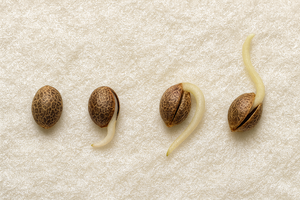
Germination is the crucial first step in cultivating cannabis, where the seed awakens from dormancy and begins developing a root and its first leaves. The paper towel method is very popular due to its simplicity, high success rate, and the ability to directly observe the emerging taproot.
Seed quality: Use only high-quality, mature cannabis seeds. These are typically dark to light brown, often with a tiger-like pattern. Pale or greenish seeds are usually immature and have poor germination rates.
Water: Ideally use distilled or reverse osmosis water to avoid chlorine or minerals that may interfere with the germination process. Alternatively, you can boil tap water and let it cool.
Paper towels: Use unprinted, tear-resistant kitchen paper. It must be absorbent but still maintain its structure when wet.
Tweezers: Use a pair of tweezers that you have disinfected with a sanitizing spray beforehand.
Layering: Take a clean plate and place two to four layers of paper towels on it. Moisten them carefully until fully saturated. Gently squeeze out excess water so the towels are damp but not dripping. Too much water can “drown” the seeds by blocking oxygen.
Placing the seeds: Place the seeds at least 2 cm apart on the lower paper towels. This prevents mold transmission and makes handling easier later.
Covering: Place another two to four layers of moist paper towels on top. Ensure each seed has direct contact with the paper.
Darkness and humidity: Place a second plate upside down over the first, or use a plastic container with a lid. This blocks light and stabilizes humidity.
Temperature: The ideal germination temperature is consistently between 23–25 °C (73–77 °F). A warm location such as the top of a router or a heating mat works well. Temperatures below 20 °C slow down germination, while temperatures above 28 °C may damage the seeds.
Daily checks: Inspect the setup daily and lift the top plate gently.
Moisture management: The paper towels must remain consistently moist. If they begin to dry out, lightly mist them with lukewarm water. Ensure no standing water collects at the bottom of the plate.
Germination time: Most cannabis seeds germinate within 1–5 days. Older or more stubborn seeds may take up to 10 days.
Ready for transplanting: The seed is ready once the white taproot (radicle) is about 1–2 cm long. Don’t wait too long, as the root can grow into the paper towel.
Caution: The taproot is extremely delicate. Use sterile tweezers or hold the seed gently by the shell. Never touch the white root directly.
Planting: Plant the seedling root-down into a prepared growing medium (e.g., seedling soil or coco). The seed should sit about 0.5–1 cm below the surface. Lightly cover the hole and water gently.
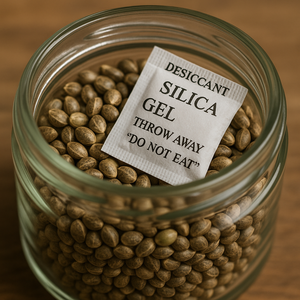
The drier the seeds, the longer they remain viable. Moisture is the biggest enemy of seed storage. Seeds that are stored even slightly moist will begin to mold or rapidly lose their germination potential. Therefore, seeds should be completely dry before storage. Ideally, the remaining moisture should be below 8%. If you're unsure, let the seeds dry at room temperature in a dry place for several days.
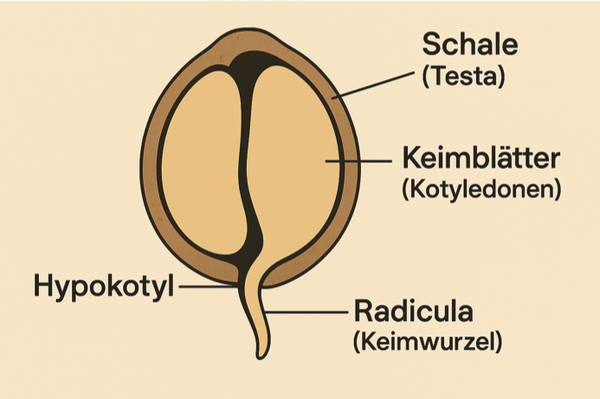
The cannabis seed is the biological foundation of every cannabis plant. It contains all genetic information and the nutrient reserves needed to develop a new plant.
Germination is triggered by moisture (activates enzymes), warmth (ideally 23°C–25°C), and oxygen. The radicle breaks through the seed coat first and becomes the main root. Shortly afterwards, the cotyledons emerge and nourish the seedling until photosynthesis begins.
Proper storage (cool, dry, dark) is essential for maintaining viability. Genetic quality and the stability of the mother plant strongly influence germination success.
Cannabis seeds offer genetic diversity, unlike clones, which are genetically identical.
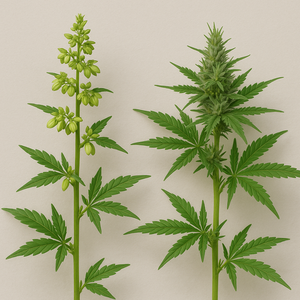
Sex determination in hemp (Cannabis) is a complex interplay between genetics (XX female, XY male) and environmental factors. The genetic predisposition is influenced by external conditions such as temperature, light intensity, nutrient availability (especially nitrogen), and humidity.
Certain stress factors (light leaks, nutrient deficiencies) can also trigger hermaphroditism as a survival strategy.
Flower formation is hormonally regulated: ethylene promotes female flowers, while gibberellins promote male flowers.
Although genetics form the foundation, growers can significantly increase the likelihood of female plants by avoiding stress and optimizing environmental conditions (e.g., cooler temperatures and sufficient nitrogen availability).

The choice between indoor cultivation and outdoor cannabis growing has a major impact on your overall success. Each method offers distinct advantages depending on budget, location, and grower experience.
Indoor growing in a grow box provides full control over climate, light cycle, and nutrient supply. Autoflowering cannabis is especially efficient indoors, as it does not require a switch to a 12/12 light cycle. Autoflowers stay compact, grow quickly, and deliver consistently high-quality results.
Outdoor cultivation stands out for its low costs and the use of free natural sunlight, offering excellent yield potential. Autoflower seeds are true game changers outdoors: they allow multiple harvests per season, mature quickly, and remain discreet thanks to their short stature.
While indoor growing delivers maximum control, consistent quality, and high discretion, outdoor cultivation offers ecological efficiency and cost savings. Choose the method that best fits your environment, budget, and goals to unlock the full potential of your cannabis seeds.

The legality of cannabis seeds differs between Germany, Switzerland and Austria. Although cannabis seeds themselves contain no THC, their legal status largely depends on the intended purpose of cultivation.
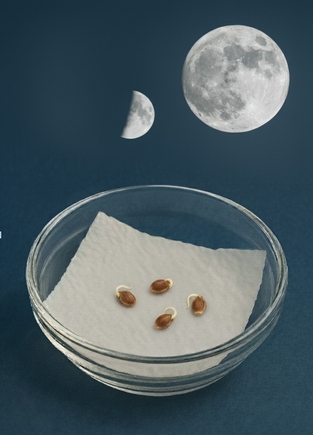
The influence of the moon on the germination of cannabis seeds is scientifically controversial, but it is often taken into account in traditional agriculture and by many growers.
From a scientific point of view, the direct effects of lunar gravity and the moon’s weak light on plants are considered to be minimal. To date, there is no clear scientific evidence demonstrating a measurable impact of lunar cycles on the germination or growth of cannabis.
The lunar calendar remains a popular tradition among many growers. Even though its effects are not scientifically proven, following lunar cycles does no harm as long as the fundamental germination conditions are met. These include adequate moisture, a stable temperature of 22–25 °C, and proper hygiene.
Growers who wish to try this approach may start germination during the waxing moon.
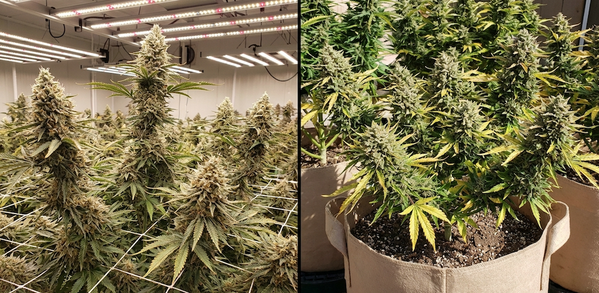
Choosing between autoflowering and photoperiod cannabis seeds is one of the most important decisions in cannabis cultivation. Both options offer distinct advantages in terms of yield, quality, speed, and level of control.
Photoperiod strains provide maximum control over the growth cycle and offer the potential for the highest yields and premium quality. To initiate flowering, they require a light cycle change to 12 hours of light / 12 hours of darkness (12/12).
Autoflowering strains are the faster and simpler option. They begin flowering automatically after approximately 3–4 weeks, regardless of the light cycle.
The right choice depends on your goals: Photoperiod strains are ideal for maximum yield and top-quality results, while autoflowering strains offer speed, simplicity, and discretion.
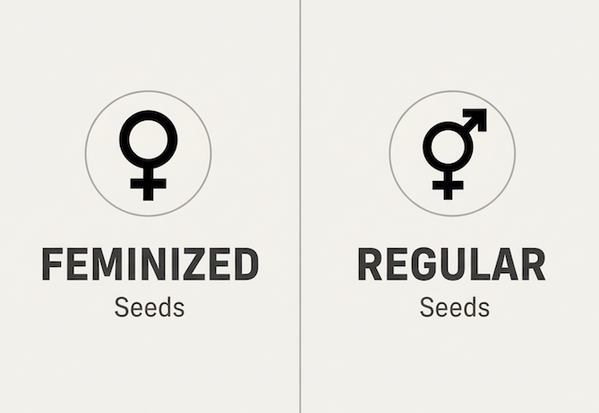
Choosing between regular and feminized cannabis seeds has a major impact on your entire grow. This decision affects efficiency, plant selection, and whether breeding is possible. There is no universally better option – only the one that fits your goal.
Feminized cannabis seeds are bred to produce almost 100% female plants, which are essential for bud production. This eliminates the need to identify and remove male plants.
Regular cannabis seeds produce approximately 50% male and 50% female plants. They represent the natural form of cannabis genetics and are essential for breeding projects.
Feminized seeds are ideal for growers focused on efficiency, simplicity, and guaranteed yields. Regular seeds are the preferred choice for breeding, pheno hunting, and maximum genetic stability. The best option depends entirely on your cultivation goals.
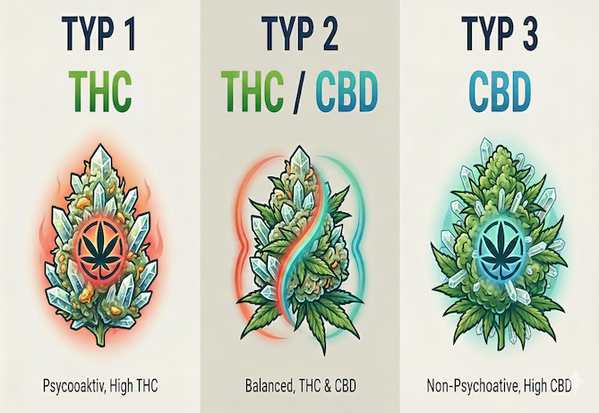
The choice of cannabinoids – primarily THC (psychoactive) and CBD (non-psychoactive) – determines the overall effect of your cannabis strain. Depending on the ratio, you can target recreational, relaxing, or therapeutic outcomes.
Strains with high THC levels (e.g. >20%) are known for their strong psychoactive effects. They are popular for recreational use but also offer medical benefits.
Strains with high CBD and very low THC (e.g. <1%) provide therapeutic effects without psychoactive impact.
Strains with a balanced ratio (e.g. 1:1 THC to CBD) benefit from the entourage effect. CBD moderates THC’s psychoactive impact while enhancing the therapeutic potential of both cannabinoids.
Choosing between THC, CBD, or a combination depends entirely on your goals. THC-rich strains deliver potency and strong effects, CBD strains focus on therapeutic benefits without intoxication, while balanced strains combine both worlds.
Terpenes also play a key role in shaping the final effect. Choose a strain that best matches your desired experience – whether recreational or therapeutic.
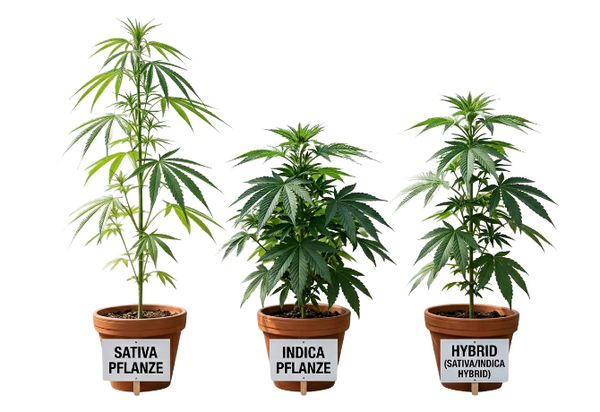
The choice between Sativa, Indica or Hybrid plays a major role in both the growth and effects of your cannabis plant. While this classification is traditional, modern understanding is refined by the entourage effect – the interaction of THC, CBD and terpenes.
Indica-dominant strains are known for their short, bushy structure and relatively fast flowering time of around 7–9 weeks. They are ideal for indoor growing.
Sativa-dominant strains grow tall and slender and typically have a longer flowering period of 10–16 weeks. They are best suited for outdoor grows or indoor spaces with sufficient height.
Hybrids are crosses between Sativa and Indica genetics. They combine characteristics of both, allowing growers to fine-tune effects, growth patterns and flowering times.
Today, the Indica/Sativa classification is complemented by the influence of terpenes, which play a key role in shaping effects.
The final experience depends on the combination of genetics, cannabinoids and terpenes.
Choose Indica if:
Choose Sativa if:
Choose Hybrid if:
Choosing between Indica, Sativa or Hybrid depends entirely on your goals. Indica stands for relaxation and compact growth, Sativa for energy and stimulation, while hybrids offer the most versatility.
Always consider the interaction of cannabinoids and terpenes to find the perfect strain for your grow.
Sex determination in hemp (Cannabis) is a complex interaction between genetics (XX female, XY male) and environmental factors. While genetics set the foundation, external conditions such as temperature, light intensity, nutrient availability (especially nitrogen), and humidity can influence the expression of sex.
Certain stress factors, such as light leaks or nutrient deficiencies, can also trigger hermaphroditism as a survival mechanism.
Flower formation itself is hormonally controlled: ethylene promotes the development of female flowers, while gibberellins stimulate the formation of male flowers.
Although genetics form the basis, growers can significantly increase the likelihood of female plants by minimizing stress and optimizing environmental conditions—such as maintaining cooler temperatures and ensuring adequate nitrogen supply.

For over 15 years, experts from California and Spain have been breeding potent, THC-rich cannabis strains with high resistance to diseases for medical and hobby users.
For over 15 years, experts from California and Spain have been breeding potent, THC-rich cannabis strains with high resistance to diseases for medical and hobby users.

Sie wollen zum ersten Mal Cannabis anbauen, wissen aber nicht, wo Sie anfangen sollen? Um Ihnen bei der Wahl der richtigen Samen zu helfen, haben wir dieses spezielle Angebot von Cannabissamen für Anfänger zusammengestellt.

Zertifizierte Hanfsamen für Profis: Hochwertige Sorten für maximalen Ertrag. Entdecken Sie unser EU-gelistetes Saatgut für Faser, Korn und CBD – legal und sicher anbauen.

Lorem ipsum dolor sit amet, consectetur elit. Integer ac purus sed nulla tempus. Donec vitae magna, non rutrum urna.
Lorem ipsum dolor sit amet, consetetur sadipscing elitr, sed diam nonumy eirmod tempor invidunt ut labore et dolore magna aliquyam erat, sed diam voluptua. At vero eos et accusam et justo duo dolores et ea rebum. Stet clita kasd gubergren, no sea takimata sanctus est Lorem ipsum dolor sit amet.
Lorem ipsum dolor sit amet, consetetur sadipscing elitr, sed diam nonumy eirmod tempor invidunt ut labore et dolore magna aliquyam erat, sed diam voluptua. At vero eos et accusam et justo duo dolores et ea rebum. Stet clita kasd gubergren, no sea takimata sanctus est Lorem ipsum dolor sit amet.