Growpedia
Strain of the Week
A new featured strain every two weeks! Discover exclusive insights, genetic profiles and the stories behind our best strains.
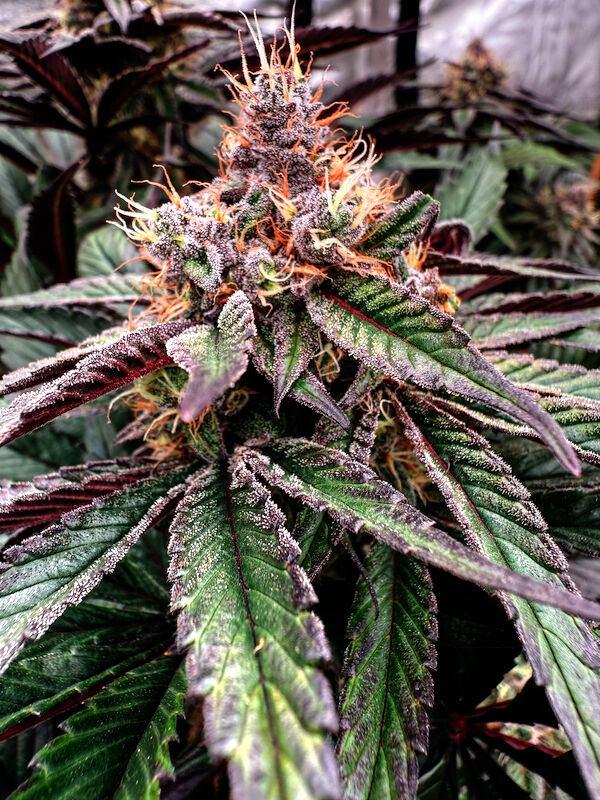
A new featured strain every two weeks! Discover exclusive insights, genetic profiles and the stories behind our best strains.
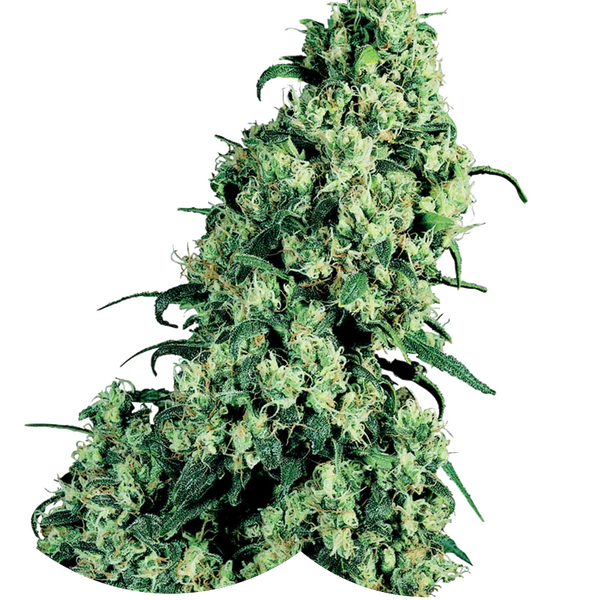
If there is one strain that can be considered the blueprint for modern cannabis breeding, it is Skunk #1. It was one of the first stabilized hybrids to reach the market and permanently changed the way cannabis is grown, consumed, and perceived. The name “Skunk” became so influential that in many countries – especially the United Kingdom – it is now often used as a synonym for particularly potent cannabis.
The story of Skunk begins in the 1970s in the United States, more precisely in sunny California. A collective of breeders called Sacred Seeds, led by the legendary Sam the Skunkman (David Watson), was looking for a solution to a major problem: landraces from tropical regions were often unstable, grew very tall, or required extremely long flowering periods.
Through intensive selection and numerous test plants, the team combined three legendary genetics:
The result was a genetic sensation: Skunk #1 combined the best of both worlds. It brought together the vigor and intense high of a Sativa with the shorter flowering time and reliability of an Indica.
In the early 1980s, Sacred Seeds came under increasing pressure from US authorities. Sam the Skunkman later brought numerous seeds and valuable genetics to Amsterdam – a genetic treasure that would play a decisive role in the development of Dutch cannabis breeding.
In Amsterdam, Sam founded Cultivator's Choice. Skunk #1 was offered there as a particularly well-stabilized hybrid. For growers, this meant far more uniform plants and more predictable traits than many of the genetics available at the time.
The name “Skunk” – referring to the animal known for its powerful smell – perfectly matched the famous aroma profile of this genetic line. Skunk #1 became known for its exceptionally intense, pungent, sweet, and spicy scent.
At a time when discretion was especially important for many growers, this powerful aroma was both a mark of quality and a challenge. Its distinctive scent eventually became the trademark of an entire family of Skunk genetics.
The influence of Skunk #1 on modern cannabis breeding is enormous. Numerous well-known strains and breeding lines have been shaped directly or indirectly by Skunk genetics.
Classics such as Cheese, Critical, Super Silver Haze, and Orange Bud show just how widely Skunk genetics have spread throughout modern hybrids.
Skunk #1 was also one of the strains that attracted major attention during the early years of the High Times Cannabis Cup, impressively demonstrating the potential of carefully selected hybrid genetics.
Even decades after its creation, Skunk #1 remains one of the most important cannabis genetics of all time. Its stability, resilience, and relatively straightforward development have made it attractive for generations of both beginners and experienced growers.
Skunk #1 is far more than just a single strain. It represents a major milestone in modern cannabis breeding and a timeless example of the influence that consistent selection and genetic stabilization can have on the development of new varieties.
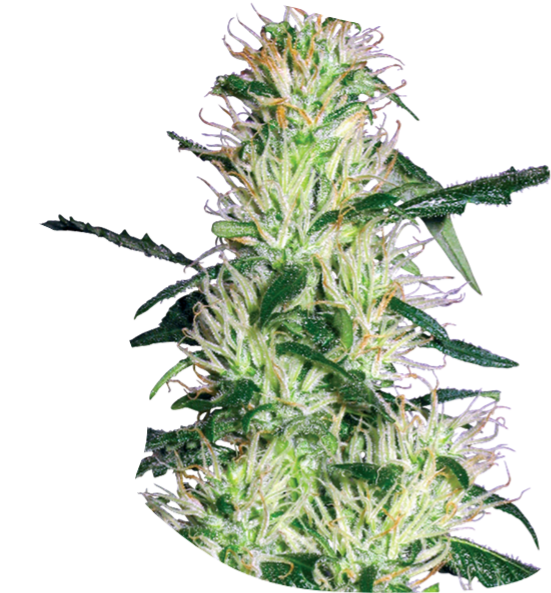
While Northern Lights defined the world of Indicas, Haze became the undisputed monument of Sativa culture. Its history reads like an adventure novel, beginning in the sunny hills of California and reaching its peak in the breeding rooms of Amsterdam. Haze is far more than just a cannabis strain—it is a genetic masterpiece that redefined the modern Sativa experience.
The story began in the late 1960s and early 1970s in Santa Cruz, California. There, two breeders known simply as the Haze Brothers (R. Haze and J. Haze) dedicated themselves to cultivating pure Sativa landraces that had arrived in the United States through underground seed networks.
Haze was not created by accident. It resulted from years of careful selection and breeding, combining genetics from some of the world's finest cannabis regions:
The result was Original Haze— an exceptionally tall plant with flowering times of up to 20 weeks, delivering aromas and effects unlike anything growers had experienced before.
The reason Haze became available in Europe is largely thanks to Sam the Skunkman (David Watson). In the early 1980s, increasing legal pressure forced many American breeders underground. Sam relocated to Amsterdam, bringing with him an extensive seed collection, including stabilized Haze genetics from the Haze Brothers.
In the Netherlands, these genetics found the perfect environment among pioneers such as Neville Schoenmakers. Neville acquired part of Sam's collection and began crossing Haze with Northern Lights, significantly reducing flowering times while making Haze suitable for commercial indoor cultivation.
Although the name "Haze" appears on countless menus today, truly pure Haze genetics have become increasingly rare.
The reason is simple: original Haze often requires 16 to 20 weeks to finish flowering. During that same period, commercial growers can harvest two complete Indica crops, making pure Haze economically challenging.
Modern classics such as Silver Haze, Amnesia Haze and Super Silver Haze are therefore hybrids. They preserve the characteristic incense, citrus aromas and uplifting cerebral high of Original Haze, while flowering much faster thanks to genetics from Skunk or Northern Lights.
Haze forever changed cannabis culture by proving that cannabis could offer far more than physical relaxation.
Its legendary "Electric High" became synonymous with clarity, creativity, focus and inspiration, making it a favorite among artists, musicians and creative thinkers.
Growing a true Haze today is a tribute to an era when exceptional quality, unique effects and remarkable genetics mattered more than fast harvests.
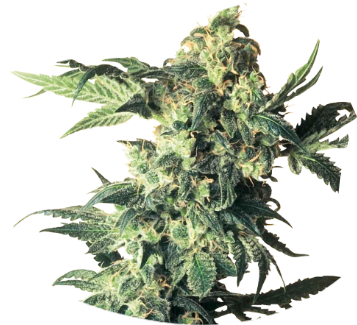
Alongside White Widow, few cannabis strains have influenced the modern cannabis gene pool as profoundly as Northern Lights. It is considered the gold standard of Indica-dominant cannabis and the genetic backbone of countless award-winning hybrids. But how did this legendary strain travel from the hidden corners of the Pacific Northwest to the world-famous coffeeshops of Amsterdam?
The roots of Northern Lights are surrounded by mystery. In the late 1970s, a breeder known only as “The Indian” cultivated eleven numbered cannabis plants on an island in the Puget Sound near Seattle, Washington.
These eleven phenotypes (NL #1 to NL #11) were believed to be primarily Afghan Indica landraces, although some sources suggest Thai Sativa influences may also have been present.
Two phenotypes stood out in particular: the compact and resin-heavy NL #2 and the highly productive, extremely potent NL #5, which would later become legendary.
Northern Lights began its global rise in 1985, when clones of the original plants reached Neville Schoenmakers, founder of Europe’s first commercial seed company, The Seed Bank — the predecessor of Sensi Seeds.
Neville immediately recognized the potential of this stable Indica genetic line. At a time when many cannabis strains were unstable or difficult to cultivate, Northern Lights offered everything growers wanted: fast flowering times, strong resistance to pests, compact growth and exceptional resin production.
Shortly after arriving in the Netherlands, Northern Lights began winning competitions one after another. In particular, Northern Lights #5 dominated the High Times Cannabis Cup in 1988, 1989 and 1990.
According to cannabis lore, the strain became so dominant that it was temporarily excluded from competition to give other genetics a chance.
What makes Northern Lights truly legendary is not only its own quality, but its role as foundational breeding material. Many of the world’s most famous strains would not exist without it.
Genetics such as Jack Herer, Super Silver Haze and Shiva Skunk all benefited from the stability, density and fast flowering traits of Northern Lights.
Breeders still use Northern Lights today to give Sativa-dominant strains more structure, shorter flowering times and denser buds without dramatically changing aroma profiles.
More than 40 years after its creation, Northern Lights remains an essential strain for collectors and cannabis enthusiasts alike.
It represents the era when cannabis breeding evolved from random experimentation into the careful selection of elite genetics. For modern cannasseurs, Northern Lights remains a symbol of deep relaxation, earthy aromas and pure Indica power.
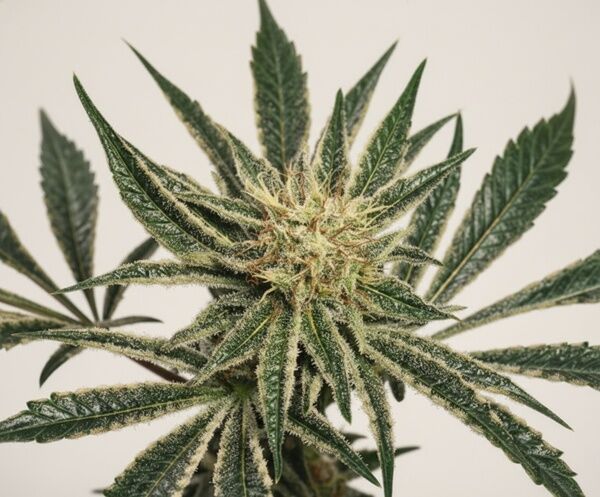
White Widow is undoubtedly one of the most iconic cannabis strains ever created. In the 1990s, no visit to the coffee shops of Amsterdam was complete without encountering it. Behind the name lies a story of breeding breakthroughs, business splits, and an ongoing dispute over authorship that still fuels debates in cannabis forums today.
The story officially begins in the early 1990s. According to the most widely known version, breeder Shantibaba (Scott Blakey) crossed a Brazilian Sativa landrace (“Manga Rosa”) with an Indian hybrid from the mountains of Kerala.
The result was a plant with groundbreaking resin production for its time. The buds were so densely covered in white trichomes that they appeared almost artificial – the “White Widow” was born.
This is where the controversy begins. In addition to Shantibaba, Ingemar, founder of De Sjamaan in the southern Netherlands, also claims authorship.
The dispute remains unresolved to this day. Greenhouse Seeds later acquired rights connected to Ingemar, while Shantibaba carried his version to the Mr. Nice Seedbank.
White Widow was officially released by Greenhouse Seed Co. in 1994. In 1995, it won the prestigious High Times Cannabis Cup, setting new standards for potency, resin production, and visual appeal.
With its high THC content and balanced, euphoric yet relaxing high, it quickly became an international benchmark strain.
In the late 1990s, Arjan Roskam and Shantibaba parted ways. Shantibaba went on to found the Mr. Nice Seedbank together with Howard Marks (Mr. Nice) and breeding pioneer Neville Schoenmakers.
Because the trademark “White Widow” remained with Greenhouse, Shantibaba renamed his original version Black Widow. According to him, this preserved the authentic 1990s genetics.
White Widow became the foundation of the famous “White Family”, including strains such as White Rhino and Great White Shark.
For purists, Mr. Nice’s Black Widow represents the most authentic expression of the original 1990s genetics. At the same time, the Greenhouse version has won countless awards and gained millions of fans worldwide.
Whether you align with “Team Shantibaba” or “Team Ingemar,” White Widow remains a true milestone in cannabis history. It symbolizes the era when modern high-performance genetics achieved global recognition – and proves that the greatest legends often come with the greatest controversies.
Lorem ipsum dolor sit amet, consetetur sadipscing elitr, sed diam nonumy eirmod tempor invidunt ut labore et dolore magna aliquyam erat, sed diam voluptua. At vero eos et accusam et justo duo dolores et ea rebum. Stet clita kasd gubergren, no sea takimata sanctus est Lorem ipsum dolor sit amet. Lorem ipsum dolor sit amet, consetetur sadipscing elitr, sed diam nonumy eirmod tempor invidunt ut labore et dolore magna aliquyam erat, sed diam voluptua. At vero eos et accusam et justo duo dolores et ea rebum. Stet clita kasd gubergren, no sea takimata sanctus est Lorem ipsum dolor sit amet.
Lorem ipsum dolor sit amet, consetetur sadipscing elitr, sed diam nonumy eirmod tempor invidunt ut labore et dolore magna aliquyam erat, sed diam voluptua. At vero eos et accusam et justo duo dolores et ea rebum. Stet clita kasd gubergren, no sea takimata sanctus est Lorem ipsum dolor sit amet. Lorem ipsum dolor sit amet, consetetur sadipscing elitr, sed diam nonumy eirmod tempor invidunt ut labore et dolore magna aliquyam erat, sed diam voluptua. At vero eos et accusam et justo duo dolores et ea rebum. Stet clita kasd gubergren, no sea takimata sanctus est Lorem ipsum dolor sit amet.
Lorem ipsum dolor sit amet, consetetur sadipscing elitr, sed diam nonumy eirmod tempor invidunt ut labore et dolore magna aliquyam erat, sed diam voluptua. At vero eos et accusam et justo duo dolores et ea rebum. Stet clita kasd gubergren, no sea takimata sanctus est Lorem ipsum dolor sit amet. Lorem ipsum dolor sit amet, consetetur sadipscing elitr, sed diam nonumy eirmod tempor invidunt ut labore et dolore magna aliquyam erat, sed diam voluptua. At vero eos et accusam et justo duo dolores et ea rebum. Stet clita kasd gubergren, no sea takimata sanctus est Lorem ipsum dolor sit amet.
Lorem ipsum dolor sit amet, consetetur sadipscing elitr, sed diam nonumy eirmod tempor invidunt ut labore et dolore magna aliquyam erat, sed diam voluptua. At vero eos et accusam et justo duo dolores et ea rebum. Stet clita kasd gubergren, no sea takimata sanctus est Lorem ipsum dolor sit amet. Lorem ipsum dolor sit amet, consetetur sadipscing elitr, sed diam nonumy eirmod tempor invidunt ut labore et dolore magna aliquyam erat, sed diam voluptua. At vero eos et accusam et justo duo dolores et ea rebum. Stet clita kasd gubergren, no sea takimata sanctus est Lorem ipsum dolor sit amet.
Lorem ipsum dolor sit amet, consetetur sadipscing elitr, sed diam nonumy eirmod tempor invidunt ut labore et dolore magna aliquyam erat, sed diam voluptua. At vero eos et accusam et justo duo dolores et ea rebum. Stet clita kasd gubergren, no sea takimata sanctus est Lorem ipsum dolor sit amet. Lorem ipsum dolor sit amet, consetetur sadipscing elitr, sed diam nonumy eirmod tempor invidunt ut labore et dolore magna aliquyam erat, sed diam voluptua. At vero eos et accusam et justo duo dolores et ea rebum. Stet clita kasd gubergren, no sea takimata sanctus est Lorem ipsum dolor sit amet.
Willkommen in unserer Growpidia – deiner Wissensquelle für Cannabis-Anbau. Hier findest du Expertenwissen für optimale Ergebnisse, egal ob Anfänger oder Profi.
Willkommen in unserer Growpidia – deiner Wissensquelle für Cannabis-Anbau. Hier findest du Expertenwissen für optimale Ergebnisse, egal ob Anfänger oder Profi.

For over 15 years, experts from California and Spain have been breeding potent, THC-rich cannabis strains with high resistance to diseases for medical and hobby users.

Sie wollen zum ersten Mal Cannabis anbauen, wissen aber nicht, wo Sie anfangen sollen? Um Ihnen bei der Wahl der richtigen Samen zu helfen, haben wir dieses spezielle Angebot von Cannabissamen für Anfänger zusammengestellt.

Zertifizierte Hanfsamen für Profis: Hochwertige Sorten für maximalen Ertrag. Entdecken Sie unser EU-gelistetes Saatgut für Faser, Korn und CBD – legal und sicher anbauen.

Lorem ipsum dolor sit amet, consectetur elit. Integer ac purus sed nulla tempus. Donec vitae magna, non rutrum urna.
.png?w=600/format=webp)
Lorem ipsum dolor sit amet, consetetur sadipscing elitr, sed diam nonumy eirmod tempor invidunt ut labore et dolore magna aliquyam erat, sed diam voluptua. At vero eos et accusam et justo duo dolores et ea rebum. Stet clita kasd gubergren, no sea takimata sanctus est Lorem ipsum dolor sit amet.
Lorem ipsum dolor sit amet, consetetur sadipscing elitr, sed diam nonumy eirmod tempor invidunt ut labore et dolore magna aliquyam erat, sed diam voluptua. At vero eos et accusam et justo duo dolores et ea rebum. Stet clita kasd gubergren, no sea takimata sanctus est Lorem ipsum dolor sit amet.