
Growpedia · Tips for Pros · Chapter 12
Terpenes, flavonoids and other organic compounds
An in-depth look at the chemistry of cannabis aroma
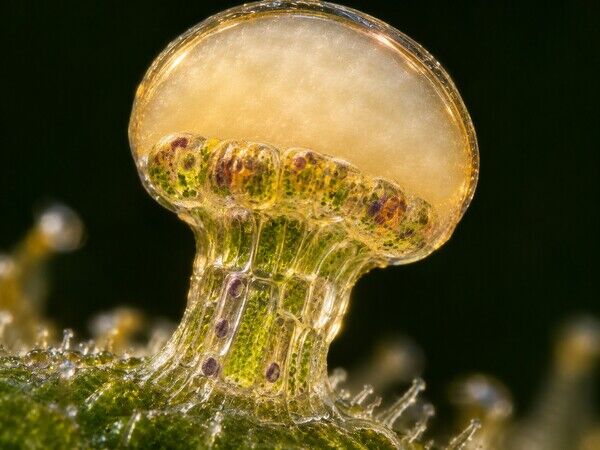
An in-depth look at the chemistry of cannabis aroma
Why does one strain smell of lemon, another of diesel and a third of cheese? The answer lies in a complex mixture of secondary plant compounds formed mainly in the glandular trichomes of the flowers. If you understand the chemistry behind it, you can choose strains more precisely – and consciously steer the aroma profile in your own grow.
Terpenes are hydrocarbons built from isoprene units (C5). The plant produces their building blocks IPP and DMAPP via two pathways: the MEP pathway in the plastids and the mevalonate pathway in the cytosol. Specialised terpene synthases turn them into the variety of aroma compounds. Interestingly, the monoterpene precursor geranyl pyrophosphate (GPP) is also a building block of cannabinoid synthesis – terpenes and cannabinoids share part of the same “factory”.
Note: many claimed effects are based on studies of isolated terpenes or on anecdotal reports. Concentrations in cannabis are comparatively low – so treat statements about specific effects with caution.
Flavonoids are polyphenols that in cannabis mainly serve as UV protection, antioxidants and pigments. Anthocyanins are responsible for purple leaves and flowers – their expression depends on genetics and environment, such as cool nights towards the end of flowering. Flavonoids contribute only subtly to taste, for example with slightly bitter notes.
A special case are cannflavins A, B and C, prenylated flavones that have so far only been detected in cannabis. In lab experiments, cannflavin A and B inhibited inflammatory mediators considerably more strongly than aspirin – whether this is relevant in humans has not yet been established.
For a long time, cannabis aroma was considered purely a matter of terpenes. More recent analyses show that some trace compounds are disproportionately important:
This also means that a lab report listing only terpenes never fully explains the aroma of a strain.
In the living plant, cannabinoids are mainly present as acids (THCA, CBDA). They are practically odourless and tasteless; only heat decarboxylates them into THC and CBD. A high THC content therefore says nothing about aroma quality. What counts for the overall experience is the interplay of all compounds – often described as the entourage effect, although its exact mechanisms are still being researched.
The aroma of cannabis is a chemical microcosm: terpenes form the foundation, flavonoids add colour and nuance, sulphur and nitrogen compounds provide the striking peaks. If you look beyond THC values and the indica/sativa classification and consider a strain's entire chemotype, you choose genetics more precisely – and get the maximum aroma out of your harvest through climate, harvest timing and curing.
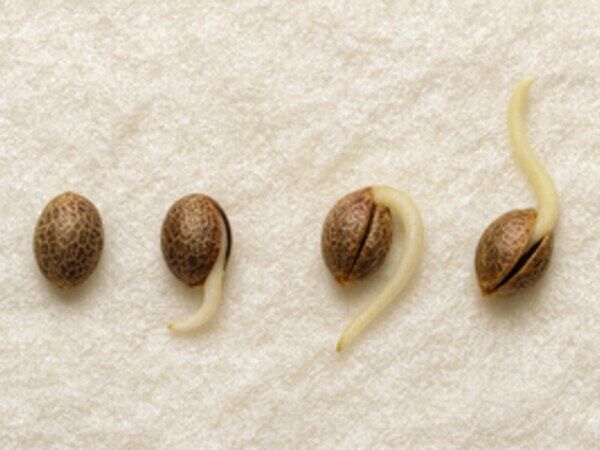
Germination is the biological process in which the dormant embryo inside the cannabis seed becomes activated and begins to grow. This process is primarily …
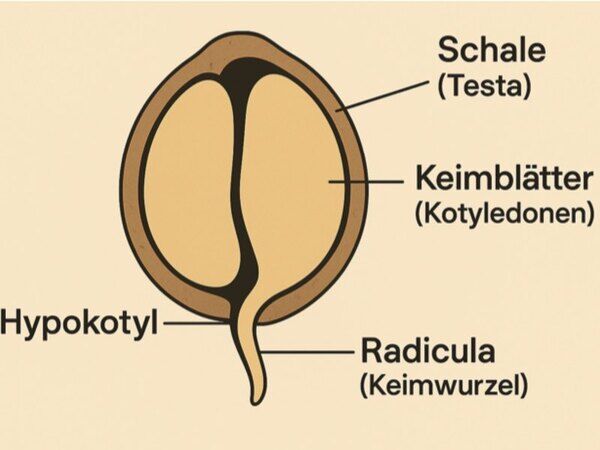
The cannabis seed is the starting point of every cannabis plant and forms the basis for cultivation and propagation. Biologically, a cannabis seed is the …
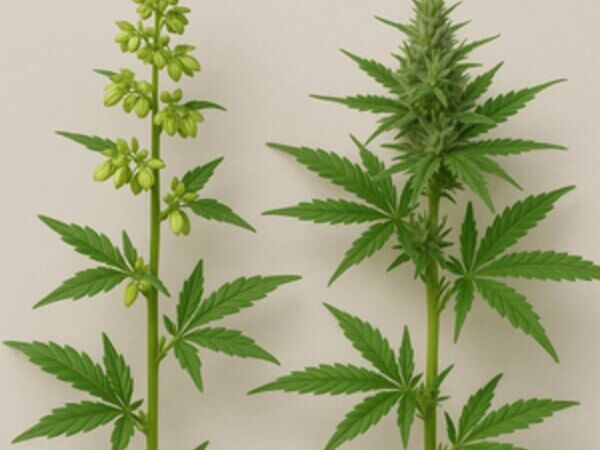
There is strong evidence that the development of male or female cannabis plants is not purely random, but influenced by several internal and external factors. …