
Growpedia · Tips for Pros · Chapter 11
The Secret of Aroma and Flavor
A Journey into the Chemistry of Cannabis
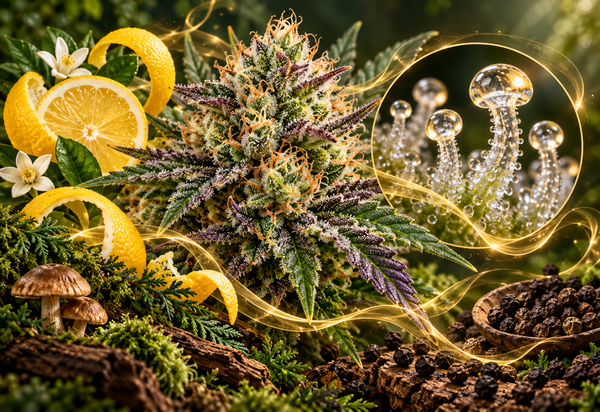
A Journey into the Chemistry of Cannabis
Have you ever wondered why one cannabis strain smells like diesel, another like citrus fruit, and another like berries and cheese? The diversity of aromas and flavors in cannabis is a fascinating subject that goes far beyond strain names and reaches deep into the biochemical complexity of the plant.
These aromas are not random. They are the result of a complex interaction between different organic compounds produced by the plant. The main players in this aromatic spectrum are terpenes, but flavonoids and even cannabinoids also play an important role, although cannabinoids are not directly responsible for aroma.
Understanding these compounds and how they interact helps explain why each cannabis strain develops its own distinctive smell, taste, and overall character.
Terpenes are the aromatic compounds of the cannabis plant. They belong to a large and diverse group of organic substances found throughout nature and are responsible for the characteristic aromas and flavors of countless plants.
They create the scent of lavender, the spiciness of black pepper, and the fresh aroma of lemons and pine trees. In cannabis, terpenes are produced in the same glands – the trichomes – that also produce cannabinoids.
Terpenes can also serve as natural defense mechanisms for the plant, helping to deter pests or attract beneficial organisms. More than 200 different terpenes have been identified in cannabis, although only a relatively small number usually occur in concentrations high enough to dominate a strain's aroma.
Flavonoids are another group of secondary plant compounds found in many fruits and vegetables. They are pigments responsible for many of the vivid colors seen in plants, such as the deep blue of blueberries or the red of strawberries.
In cannabis, flavonoids contribute to the coloration of flowers and leaves, especially the purple and reddish tones found in some varieties.
While terpenes are primarily responsible for aroma, flavonoids can also contribute subtly to flavor. Cannabis-specific flavonoids are known as cannflavins.
The best-known cannabis compounds are the cannabinoids, particularly THC (tetrahydrocannabinol) and CBD (cannabidiol).
Unlike terpenes, cannabinoids themselves contribute relatively little to the characteristic aroma of cannabis. In their acidic forms, THCA and CBDA, they are practically odorless and tasteless.
Their role in the overall experience is nevertheless crucial. When cannabis is heated, cannabinoids undergo decarboxylation while volatile terpenes are released. The ratio of THC, CBD, and other cannabinoids can also influence how the overall effects of a strain are perceived.
The concept of the entourage effect describes the idea that the different chemical compounds in cannabis – cannabinoids, terpenes, and flavonoids – interact with one another.
You can think of the plant as an orchestra:
This is one reason why two strains with similar THC levels can still smell, taste, and feel very different from one another.
For this reason, the traditional Sativa/Indica classification is increasingly supplemented by the concept of the chemotype – the specific chemical profile of cannabinoids, terpenes, and other compounds within a strain.
The enormous variety of cannabis aromas and flavors results from a complex mixture of plant compounds, with terpenes playing the central role in aroma. Cannabinoids such as THC and CBD contribute primarily to the effects, while flavonoids add color, flavor nuances, and further complexity.
The interaction between these compounds is what makes each strain unique. Rather than focusing exclusively on THC or CBD percentages, looking at the complete cannabinoid and terpene profile provides a much better understanding of a strain's individual character.
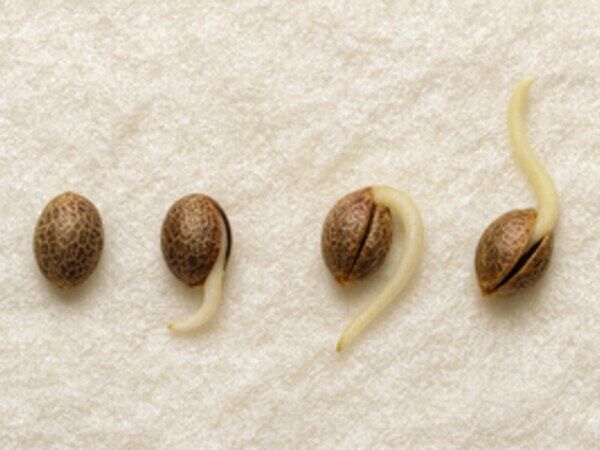
Germination is the biological process in which the dormant embryo inside the cannabis seed becomes activated and begins to grow. This process is primarily …
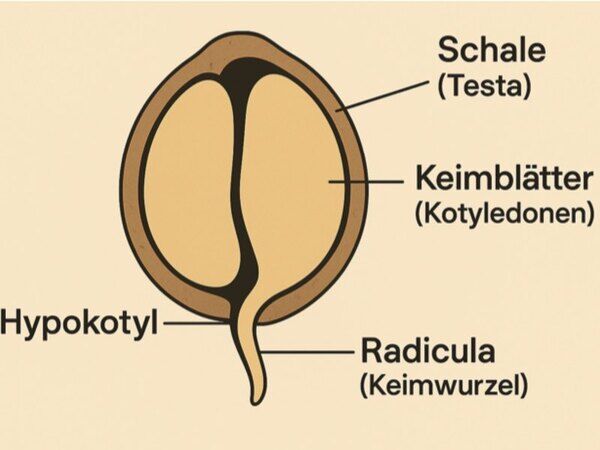
The cannabis seed is the starting point of every cannabis plant and forms the basis for cultivation and propagation. Biologically, a cannabis seed is the …
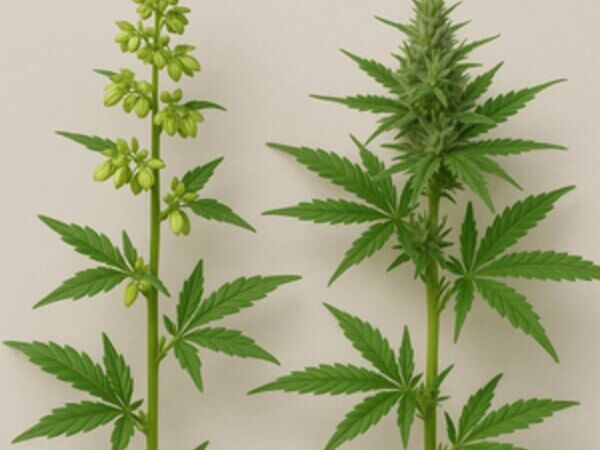
There is strong evidence that the development of male or female cannabis plants is not purely random, but influenced by several internal and external factors. …